

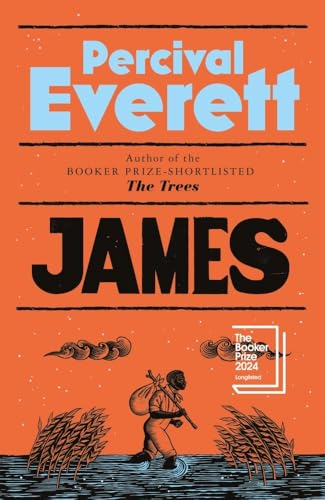
London: Mantle 2024
302 pages
ISBN 978-1-03-503124-5
James by Percival Everett is a retelling of Mark Twain’s The Adventures of Huckleberry Finn. Everett rewrites the story from the perspective of Jim, the enslaved man who accompanies Huck downriver. By shifting the focus, Percival Everett not only questions the canon, but also reveals everything that the original narrative left out: the lucidity, ingenuity and dignity of those who live under structural violence.
The novel moves along at a brisk pace, and this reinterpretation of the situation keeps us glued to its pages. Everett plays with irony and dark humour to show how language becomes both a mask and a weapon: James learns to speak differently depending on who is listening, and this ‘double voice’ exposes the hypocrisy of a society that boasts of freedom while maintaining slavery. The journey down the Mississippi is thus not only a literal journey; we also witness the characters’ growth and the many moral dilemmas they face.
James’s greatest strength is how he turns the familiar into something new. He does not destroy the classic, he challenges it. He invites us to ask ourselves who narrates the stories we think we know, what silences sustain them, and what happens when we finally listen to those who were not heard. The result is a vibrant novel, painful at times, luminous in its humanism and very topical in its questions about power, race and citizenship. It makes us question the price of telling the truth not only in the past, but also in today’s world.
At Donostia Book Club, we will analyse the book in detail on October, 13th and try to answer the following questions (beware, they may contain spoilers!):
- How does your perception of the story change when you hear it told by
  James rather than Huck?
- What does James's “double voice” reveal about the power of language?
- What does each character understand by “freedom”? How do these
  definitions clash throughout the journey?
- Are there any decisions made by James that you found morally
  ambiguous? Why?
- What does Everett gain and risk by rewriting Twain?
- At what points does the novel explicitly dialogue or argue with the original?
- How do humour and satire work in scenes of extreme violence or tension?
- Do you think humour softens or intensifies social criticism?
- What roles does James adopt in order to survive? Which would you say
  is his most authentic ‘self’?
- What contemporary echoes did you find in the novel?
- How does Everett use the rhythm of the river as a narrative metaphor?
- What is the situation of enslaved families, women, and children?
- How is fatherhood presented in the novel?
- What is the importance of reading and literacy in this story?
|