

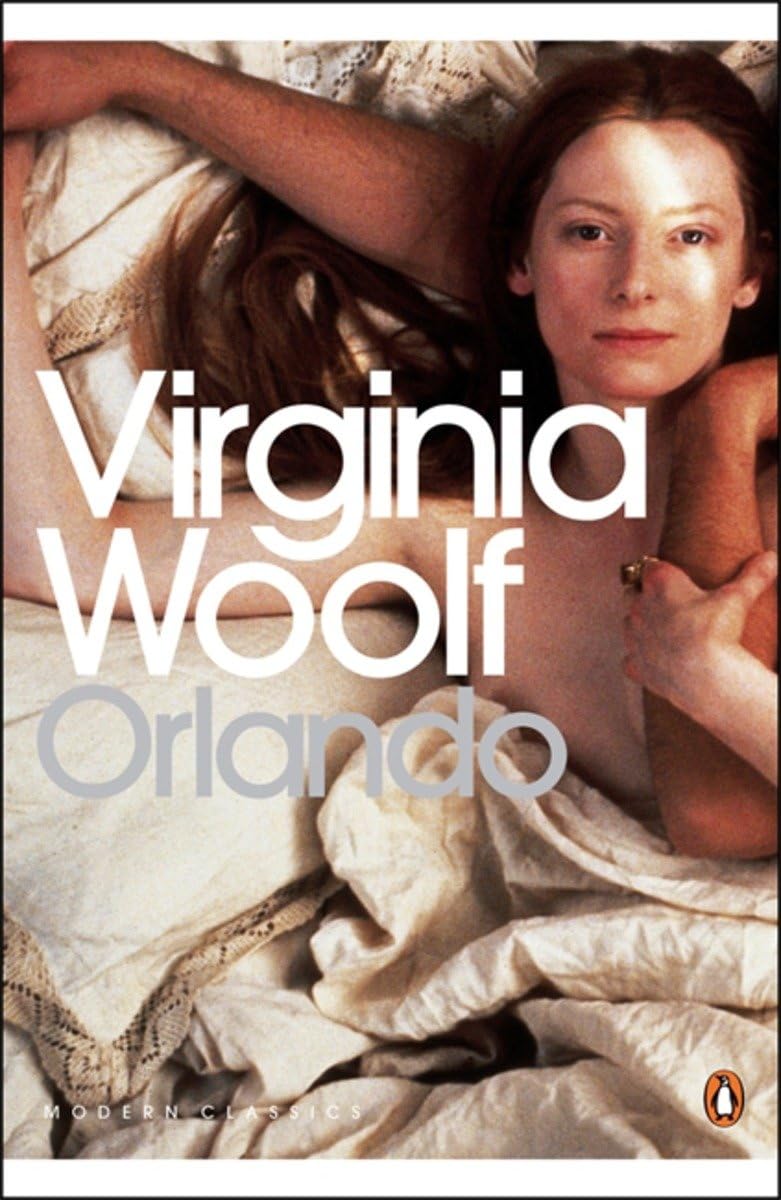
London: Penguin Books 2019
272 pages
ISBN 978-0-241-37196-1
Post hau ingelesez dago.
The next Donostia Book Club selection is one of the most imaginative and boundary-breaking novels in English literature: Virginia Woolf’s Orlando: A Biography.
Published in 1928, Orlando tells the story of a young nobleman in Elizabethan England who mysteriously lives for over three hundred years. Not inly this, partway through the book, Orlando wakes up as a woman. Orlando continues through the centuries, witnessing the changing fashions, politics, and literary styles of England, while reflecting on what it means to live, love, and create. Even today it’s feels strikingly modern and innovative.
Woolf called the book a “biography,” but it’s really more of a literary game. The narrator treats Orlando as a real person, with mock-serious asides and footnotes, yet everything about the story is delightfully impossible. Through this playful structure, Woolf questions how we define identity, history, and truth. An interesting fact is that the novel was inspired by Woolf’s close friend and lover Vita Sackville-West, and many readers see it as Woolf’s affectionate tribute to her. Vita’s family home, Knole, even appears in the novel under another name.
If you want to join the meeting on November 3rd at 19:00 and/or discuss the book below are some questions we’ll try to answer. Exceptionally the meeting will be held in Sala Duque De Mandas (entrance from Plaza de la Constitución).
- How does Woolf blend centuries of English culture and writing into one life story?
- What does the novel say about how writers express themselves across different eras?
- What is the narrator’s role in Virginia Woolf’s Orlando?
- What is the nature of the relationship between Orlando and Queen Elizabeth I?
- How is Orlando’s relationship with Sasha a strike against conformity?
- What are the benefits of cross-dressing as evidenced in Orlando?
- How do Orlando’s long stretches of sleep advance the narrative?
- How does Orlando’s reaction to her transformation in Chapter 3 reflect Virginia Woolf’s own view of gender and identity?
- What changes for Orlando after the transformation, and what stays the same?
- How do Orlando’s views about poets change after she meets the literary giants of the 18th century?
- How do Orlando’s thoughts about fame change over time?
- What do light and darkness represent in Virginia Woolf’s Orlando?
- How does the narrator’s reaction to the year Orlando spends writing reflect the sexism of the Victorian era?
- What is significant about the birth of Orlando’s son and his subsequent disappearance from Orlando?
Some of the questions were taken from https://biblioteques.l-h.cat/